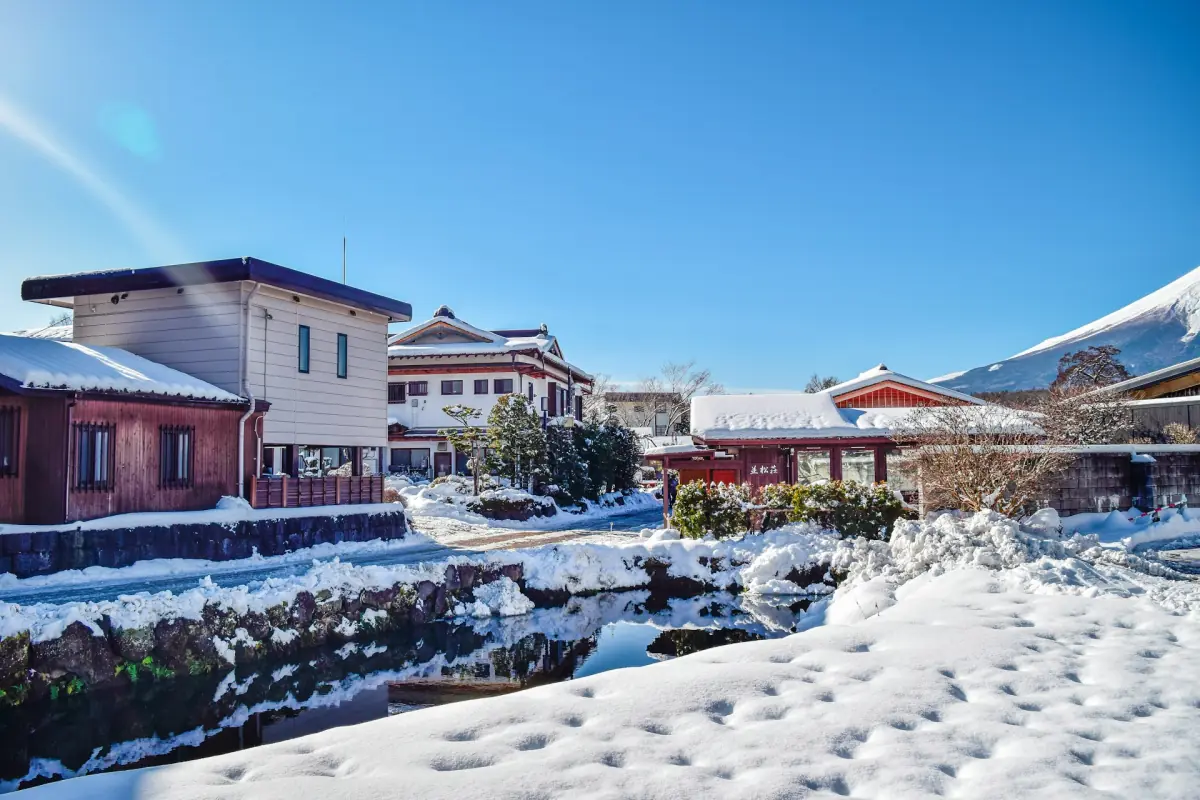
Finding your way around the Oshino Hakkai ponds
The Oshino Hakkai ponds are a group of eight springs in Shibokusa, in Oshino village, Yamanashi. They belong to a lived-in village landscape of paths, bridges and traditional buildings. A useful first step is to recognise the named ponds rather than treating every pool beside a shop as part of Hakkai. Keep the Japanese names with your map: these identify the places more clearly than a photograph of water alone.
Waku-ike, 湧池, and Kagami-ike, 鏡池, are useful names to pick out while planning. Deguchi-ike, 出口池, lies away from the central cluster, so include it deliberately rather than assuming all the ponds sit together. Sokonuke-ike, 底抜池, is inside the Hannoki Museum grounds. Its access therefore needs a different plan from a walk through the open village areas.
The eight names for your village walk
The municipal list names 出口池, Deguchi-ike; お釜池, Okama-ike; 底抜池, Sokonuke-ike; 銚子池, Choshi-ike; 湧池, Waku-ike; 濁池, Nigori-ike; 鏡池, Kagami-ike; and 菖蒲池, Shobu-ike. Keep this list as an orientation aid rather than a compulsory walking order. Your arrival point, the museum opening and the space available on narrow paths can all shape the route you choose.
The municipality provides a village map and pond guide. Use them to join up the names before setting off, especially if including Deguchi. A historical local guiding model allows about two hours for a route around the ponds. That is an example of a guided itinerary, rather than a personal walking-time promise. Leave room for looking at the water, passing other visitors and returning to your onward transport.
A day trip to the ponds
This tour includes an Oshino Hakkai stop and transport for a village visit.
Hand-picked tours, booked through GetYourGuide. Prices are indicative starting prices in US dollars (as of October 2026). Tap a tour for live availability and the current price in your currency.

Reach Oshino on a regional excursion
An Oshino village stop with regional transport offers a way to visit the springs within a wider Fuji itinerary.
Water from the Fuji landscape
The water has a connection with Mount Fuji that is less immediate than a mountain reflection. The village describes meltwater soaking underground, passing through lava and volcanic deposits and reappearing after decades. This long passage is the useful idea to carry into the walk. It is not necessary to attach a precise age to the water in each pond to appreciate the springs.
The ponds also have a religious history connected with Fuji pilgrimage. Reading the cultural history of Oshino Hakkai before walking helps explain why water is central to the place. Enjoy the springs from the paths and follow local directions around the edges. For the practical distinction between open areas and the museum, use the entry and opening-hours guide.
Respect for residents and the spring water
Do not throw anything into the ponds, including coins. Retrieving objects is difficult, and protecting the water is part of caring for the village. Keep your belongings secure near the edges and take rubbish with you. When stopping for a photograph, leave room for people to pass and remember that these paths form part of a village where people live and work.
Steps and narrow paths
Some routes have steps, narrow sections or unpaved surfaces. Choose a manageable route for your party rather than making every pond a requirement. The visitor information office offers wheelchair loans, with reservations recommended; the paths themselves still have accessibility limitations. Keep dogs on a lead, and carry them or use a carrier when entering shops.
A pond walk within a regional day
A regional excursion can handle the journey to Oshino and leave you with a village stop. The visit option presented here includes an Oshino stop, air-conditioned transport, a driver and multilingual guide. Use the stop for the parts of the village that fit the available visit, rather than planning a guided circuit of every spring. The tour comparison explains other regional routes.
Lake Yamanaka belongs to the wider Fuji Five Lakes landscape near Oshino. The photograph shows that lake, with swans and Fuji beyond the water, rather than one of the village springs. Keep regional lake scenery and the smaller pond walk distinct when choosing what to include in your day.


Questions about your visit
Are all the ponds beside each other?
Deguchi is away from the central cluster. Include its position when drawing up your route, and keep the museum access to Sokonuke in mind.
How long should the walk take?
A historical guiding model uses about two hours. Your own visit depends on the route, pauses, access needs and whether you enter the museum.
Can I visit after sunset?
Plan the walk in daylight. The local tourism association advises against walks after sunset because street lighting is limited.