Reading Oshino Hakkai history through its water
Oshino Hakkai history begins with the relationship between spring water and Mount Fuji. In Shibokusa, within Oshino village, the ponds formed a place of ritual cleansing for Fuji pilgrims. That religious connection gives a walk here more meaning than a search for mountain reflections alone. Water, settlement and the sacred mountain belong together in the cultural story of the place.
The physical journey of the water adds another layer. The village describes Fuji meltwater soaking underground, being filtered through lava and volcanic deposits and emerging after decades. The cultural history concerns how people understood and used the springs within pilgrimage. Keeping both ideas in mind makes it possible to appreciate the water without turning a religious tradition into a precise scientific age for each pond.
Ritual cleansing and Fuji pilgrims
The municipality describes Oshino Hakkai as an old religious place associated with cleansing before Fuji pilgrimage. Water purification also belongs to the wider Fujisan heritage of mountain worship, shrines and pilgrimage routes. Consider this background when walking between ponds: their significance is tied to human journeys and beliefs as well as the spring landscape that can be seen today.
Enjoy that history from the paths and public visitor areas. The historical purification tradition is something to understand, rather than an activity to add to a present-day pond visit. For the names and orientation of the springs, use the pond walking guide. It keeps the practical route separate from the cultural explanation, especially when including the outlying Deguchi Pond or the museum grounds.
Visit Oshino Hakkai on a day trip
This guided day trip offers transport and a stop in Oshino Hakkai for a village visit.
Hand-picked tours, booked through GetYourGuide. Prices are indicative starting prices in US dollars (as of October 2026). Tap a tour for live availability and the current price in your currency.

Visit the village within its Fuji setting
A regional day out with an Oshino stop brings you to the spring landscape. Use this history guide to add context to your own village walk.
Fujisan as cultural World Heritage
Fujisan was inscribed as UNESCO cultural World Heritage in 2013. Its twenty-five components bring together the sacred mountain, pilgrimage routes, shrines, springs and lakes. Oshino’s ponds belong within that larger cultural relationship. Their importance is therefore broader than the appearance of clear water or an attractive village view: they help express the connection between people and the mountain.
On a visit, let this wider setting guide what you notice. A bridge, a waterside path or a traditional building can frame a view, while the pilgrimage background explains why the springs matter. The present village is also a place of daily life. Give residents space, keep pathways clear when stopping and avoid treating every contemporary building as an unchanged relic of the pilgrimage era.
Thatched houses, Hannoki Museum and its exhibition
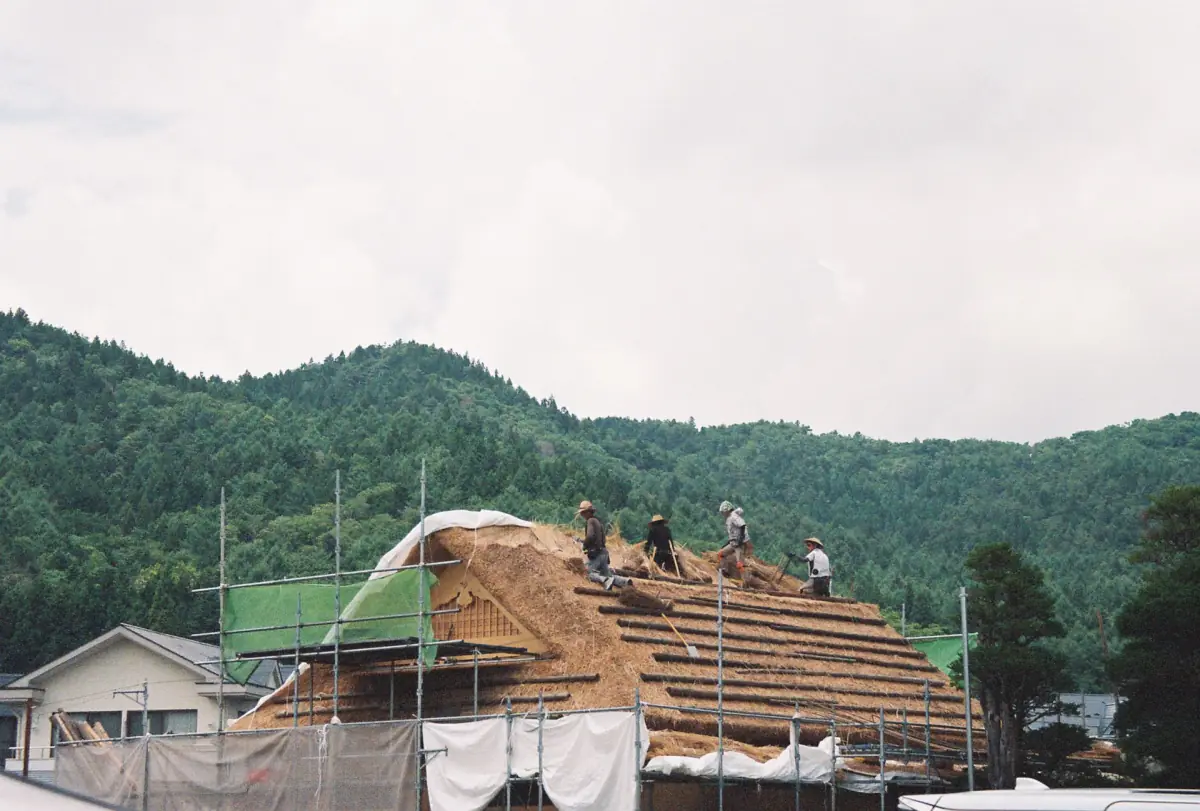
Traditional thatched buildings, waterwheels and bridges are part of Oshino’s visitor landscape. Hannoki Museum offers a more specific encounter with a historic house. The operator dates the Watanabe family house to the second half of the eighteenth century. Inside, household objects and equipment associated with agriculture, silkworm rearing and weaving connect the building with the work of village life.
Approach the exhibition as a complement to the springs. It changes the focus from the surface of the water to the tools and domestic setting of a rural household. The wooden waterwheel in the photograph belongs to this architectural context. For museum admission and opening arrangements, read the hours and fees guide before deciding how to fit the house into your walk.
The museum also recounts a legend about Sokonuke: objects that disappeared there were said to emerge in Okama. Read this as a local story passed down about the water. It offers a way into the imaginative life of the ponds alongside the physical explanation of their underground water source.

Historic buildings and Shibokusa Sengen Shrine
Shibokusa Sengen-jinja adds a shrine setting to the village’s cultural landscape. The municipality gives its foundation as 807 and dates its three revered wooden figures to 1315. It describes the main building as a locally protected cultural property in the nagare-zukuri style, with a hinoki bark roof. These are municipal accounts of the shrine’s heritage, useful when considering its place in the local story.
Build your day around the places you want to experience rather than expecting a regional excursion to provide a specialist museum visit. The visit option here includes an Oshino stop with air-conditioned transport, a driver and multilingual guide. The excursion overview helps compare regional programmes. If you prefer to focus closely on the house and springs, allow that interest to shape the time you set aside for the village.


Questions about your visit
Why are the ponds linked to pilgrimage?
The municipality describes them as a place of ritual cleansing for Fuji pilgrims, within the wider tradition of mountain worship and purification.
What does the museum display?
The historic Watanabe house contains household objects and equipment linked to agriculture, silkworm rearing and weaving.
Is the Sokonuke story a historical account?
It is presented as a legend about objects disappearing in Sokonuke and appearing in Okama, a local tradition associated with the ponds.