Choosing the best time to visit Oshino Hakkai
The best time to visit Oshino Hakkai depends on the landscape you hope to see and the conditions you are comfortable travelling in. Spring blossom, autumn colour and winter scenery each need different planning. Start with the season, then use the forecast and transport information for the actual day. A regional climate average helps with clothing and broad expectations; a dated local seasonal report helps with blossom or leaves.
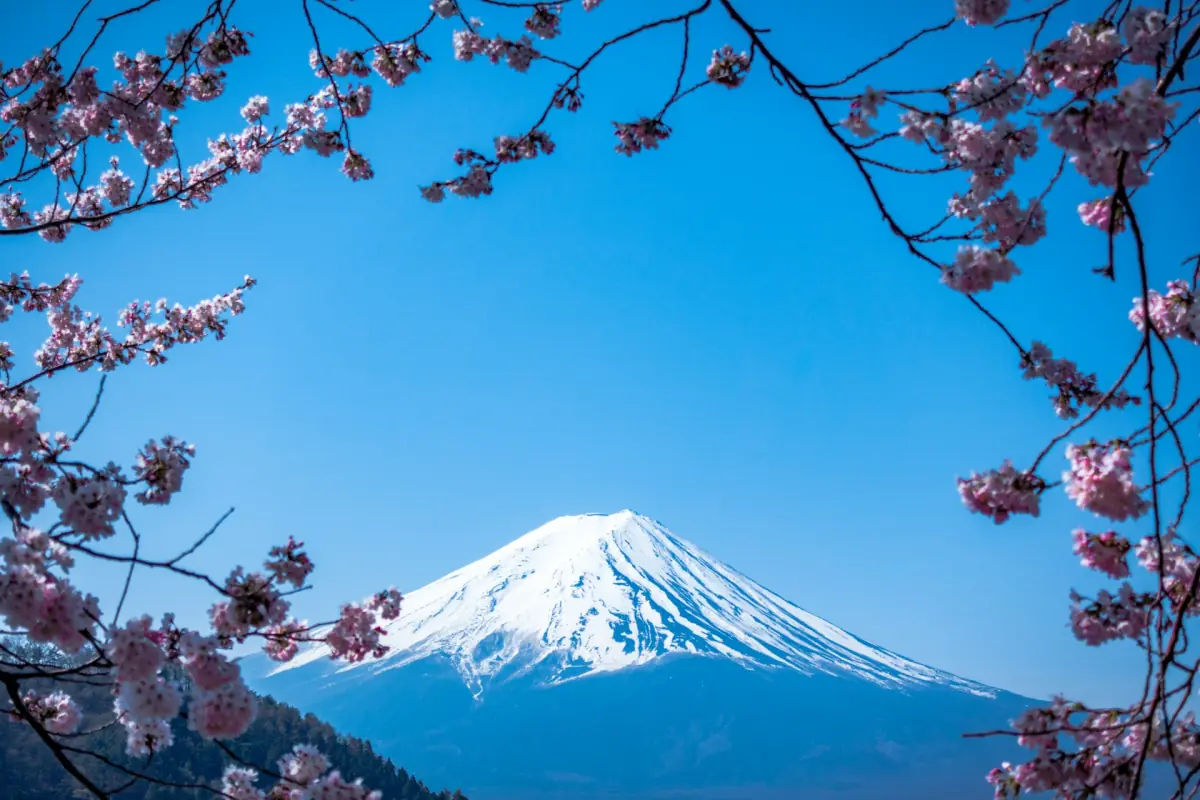
Keep visibility separate from the season. A photograph of the village and Mount Fuji shows one moment, while your visit will have its own cloud and weather conditions. Leave room in the plan for enjoying the ponds and village paths themselves. The pond guide helps make the walk worthwhile without building the whole visit around a single mountain view.

Monthly weather: Kawaguchiko climate normals
The table uses JMA's Kawaguchiko station and the 1991 to 2020 normal period. High and low figures are monthly means of daily maximum and minimum temperatures, while rain is the mean monthly precipitation total. These are regional historical climate values, rather than measurements at an individual Oshino pond or a forecast for your travel date.
September has the highest monthly precipitation in this series and December the lowest. Winter nights are cold, and the summer months bring more precipitation than the driest winter months. Use those patterns to prepare layers and rain protection, then consult the day's forecast. A relatively dry monthly average still leaves room for rain on a particular visit.
| Month | Mean daily high °C | Mean daily low °C | Monthly precipitation mm |
|---|---|---|---|
| January | 5.5 | −5.7 | 60.9 |
| February | 6.6 | −4.8 | 55.4 |
| March | 10.5 | −1.3 | 107.6 |
| April | 16.1 | 3.7 | 106.1 |
| May | 20.6 | 8.9 | 123.2 |
| June | 23.0 | 13.7 | 157.1 |
| July | 27.2 | 18.0 | 178.4 |
| August | 28.1 | 18.5 | 176.8 |
| September | 23.8 | 14.8 | 264.7 |
| October | 18.3 | 8.7 | 230.0 |
| November | 13.8 | 2.2 | 76.0 |
| December | 8.5 | −2.9 | 49.8 |
Route B through the seasons
Route B visits Oshino Hakkai and Lake Yamanaka, with a possible seasonal change to the Oishi Park stop.
Hand-picked tours, booked through GetYourGuide. Prices are indicative starting prices in US dollars (as of October 2026). Tap a tour for live availability and the current price in your currency.

A seasonal route with an Oshino stop
Route B combines Oshino and Lake Yamanaka; the autumn programme uses Maple Corridor in place of Oishi Park.
Spring blossom and autumn colour
The local blossom notice dated 27 March 2026 described early to mid-April as a frequent flowering and visiting period in recent years, with timing dependent on weather. Use it as seasonal context. For a future spring visit, look for that season's local reports rather than fixing the entire route to the same calendar dates.
The autumn report of 23 October 2026 described colour only beginning along the path to the SORA-no-IRO terrace. Its account of a peak in the first to second week of November referred to the previous year. Keep that retrospective separate from the dated observation. If autumn leaves are your main interest, allow the actual colouring to guide the visit rather than treating the previous peak as a recurring appointment.
The selected seasonal day trip visits Oshino on Route B, with Lake Yamanaka in that programme. During the autumn foliage programme, Maple Corridor replaces Oishi Park. Choose Route B for an Oshino visit and match the route to the seasonal programme. The outing includes return transport and an English- and Korean-speaking guide; meals, travel insurance and personal spending are extra.
Winter and ice risk
The local tourism association describes snow as usual from late November into March and recommends winter tyres and checking road conditions. Shaded patches may be icy even where snow is absent. Snow scenery therefore comes with practical questions about the drive, the approach on foot and the conditions at the time of travel.
Plan a shorter, adaptable walk when surfaces are difficult, and choose footwear with the route in mind. Some village paths are narrow or unpaved and there are steps. Those physical features matter more when the surface is slippery. For the vehicle and bus options, use the arrival guide. An overnight stay should also have a workable final approach; compare village and regional bases before deciding.
Time of day, daylight and crowds
Oshino Hakkai is a popular and often busy visitor destination. Choose a visiting time by balancing your outward journey, the daylight available for walking and the return connection. An earlier start can give your own itinerary more room, but it should be chosen for that practical reason rather than a promise of empty paths or a clear view of Fuji.
The open village areas have no common gate or general opening time. The tourism association nevertheless advises against walking after sunset because street lighting is limited. Plan the walk in daylight. If you want to include Sokonuke Pond, its access depends on the Hannoki Museum, so read the museum hours and fees when choosing a time.
With an organised day trip, the village visit sits inside a wider route. Compare that format with an independent bus visit if your main priority is choosing how to spend the daylight in Oshino. Leave pauses in the plan and give residents room on the village paths.
Frequently asked questions
Does the climate table predict my visit?
It gives regional Kawaguchiko normals for 1991 to 2020. Use a weather forecast for your actual date and local seasonal reports for blossom or autumn colour.
Is winter a reliable time for Fuji views?
Choose winter for the conditions you want to experience, while allowing for cloud, cold and ice. Keep the pond walk itself at the centre of the plan.
Should I plan a walk after sunset?
The local association advises against it because street lighting is limited. Use daylight and fit the return journey around the walk.